You read a bag of coffee that promises “bright, citrusy acidity,” and it sounds like a selling point. Then you take a sip of a different cup and it just tastes sour, like something went wrong. Same word, two very different experiences, and it’s no wonder people get confused.
What does acidity in coffee mean, really? It’s one of the most misunderstood terms in the industry, mostly because it gets used to describe both a prized, deliberate flavor quality and an unpleasant defect, depending on context. This guide breaks down what acidity actually is, why it shows up differently depending on origin, roast, and brew method, and how to tell the difference between acidity done well and acidity gone wrong.
What Does Acidity in Coffee Actually Mean?
In coffee tasting, acidity refers to a lively, tangy, sometimes fruit-like quality that adds brightness and complexity to a cup. It’s one of the core attributes cuppers evaluate alongside sweetness, body, and aftertaste, and in specialty coffee, it’s generally considered a positive trait rather than a flaw.
This is different from acidity in a strict chemistry sense, which just refers to a substance’s pH level. Nearly all brewed coffee sits somewhere in a mildly acidic pH range, similar to many everyday foods and drinks. But that chemical fact doesn’t tell you much about flavor on its own. A coffee can have a fairly ordinary pH and still taste vividly bright, or measure more acidic and taste comparatively flat. In tasting terms, acidity is about the sensation on your palate, that snap of brightness, more than a specific number.
Acidity vs. Sourness: What’s the Difference?
This is where most of the confusion comes from, and it’s worth untangling clearly.
Acidity, in the positive, tasting-note sense, feels bright, clean, and often pleasant, similar to biting into a ripe green apple or a slice of citrus. It adds lift and complexity to a cup, and it usually appears alongside sweetness rather than instead of it.
Sourness feels sharp, unbalanced, and unpleasant, more like biting into something under-ripe or slightly off. It tends to sit on its own, without the sweetness or roundness that makes pleasant acidity enjoyable.
The difference isn’t really about the acids themselves, it’s about balance and context. A coffee with well-developed acidity tastes complex and satisfying because that brightness is balanced by sweetness and body. A coffee that tastes sour is usually missing that balance entirely, often because of a brewing or roasting issue rather than the beans’ natural characteristics. Our Acidity Explained guide goes deeper into how cuppers score this quality during formal evaluation.
What Causes Acidity in Coffee?
Acidity in coffee comes from a combination of natural compounds in the bean and choices made throughout growing, processing, roasting, and brewing.
Organic Acids Naturally Present in Coffee
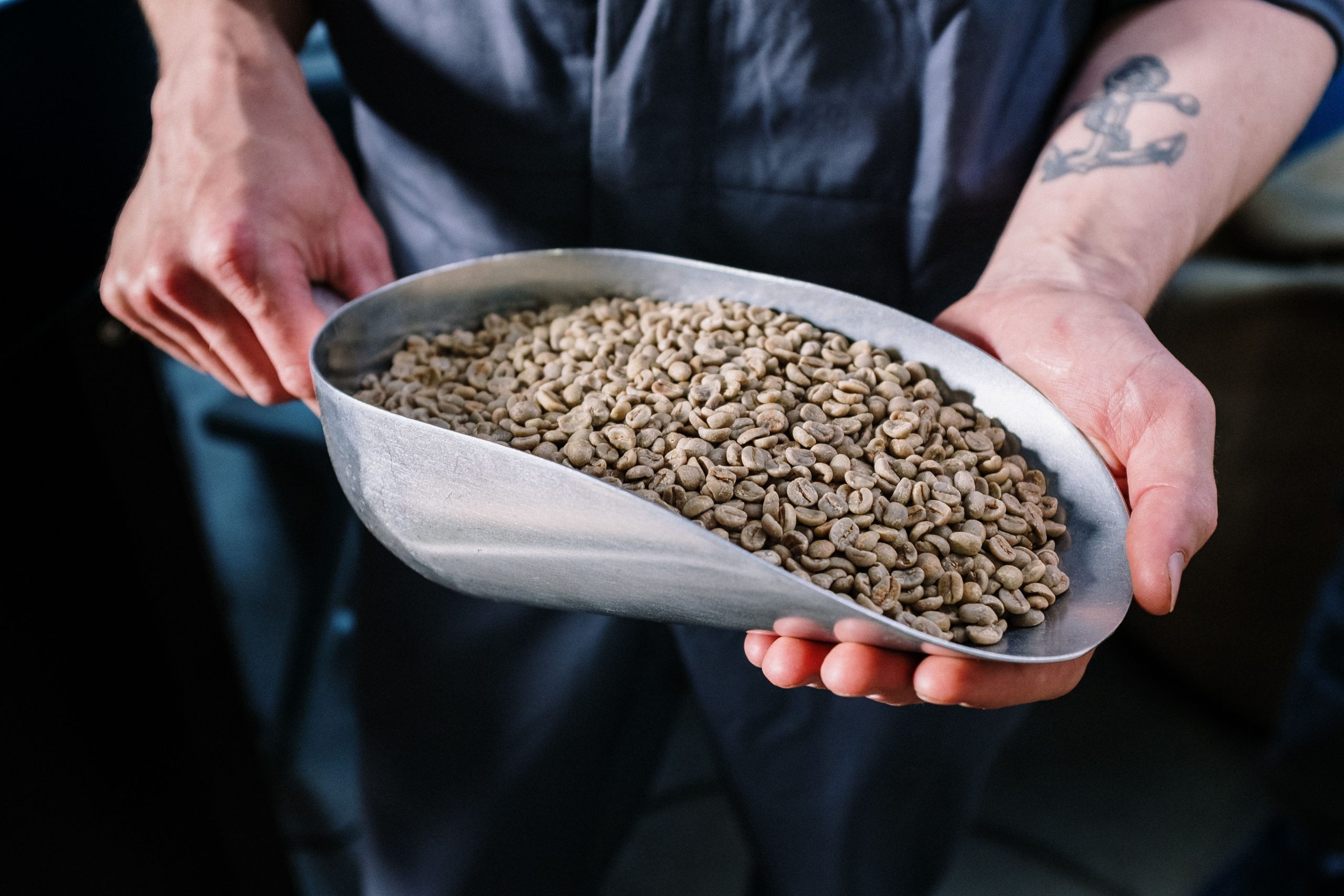
Green coffee beans contain a range of naturally occurring organic acids, including chlorogenic acid, citric acid, malic acid, and smaller amounts of acetic acid. These compounds exist in the bean before it’s ever roasted, and each contributes a slightly different character to the final cup. Chlorogenic acid, in particular, plays a major role in perceived brightness and is one of the compounds most affected by roasting.
Growing Altitude and Climate
Coffee grown at higher altitudes generally develops more pronounced acidity. Slower ripening in cooler, high-elevation conditions gives the coffee cherry more time to develop these organic acids and other flavor compounds, which is a big part of why high-altitude coffees are often prized for their brightness and complexity.
Coffee Variety and Processing Method
Different coffee varieties naturally lean toward different acidity levels, and processing method plays a role too. Washed coffees, where the fruit is removed from the bean before drying, tend to showcase acidity clearly and cleanly. Natural and honey-processed coffees, where the fruit stays in contact with the bean longer during drying, often develop more sweetness and body that can round out or soften that same acidity.
Roast Level and How It Breaks Down Acids
Roasting has a major effect on acidity. As beans roast, heat gradually breaks down chlorogenic acid and other organic acids, which is why lighter roasts generally taste brighter and more acidic than darker roasts. By the time a bean reaches a dark roast profile, a significant share of its original acid content has already broken down, leaving a smoother, less bright cup with more body and roasted flavor instead.
Extraction and Brewing Method
How you brew changes which compounds actually make it into your cup, and in what concentration. Filtered methods like pour-over tend to highlight acidity clearly, since paper filters remove oils that would otherwise round out the flavor. Full-immersion methods like French press let more of those oils through, producing a fuller body that can soften perceived acidity. Espresso concentrates flavor intensely, which can make acidity read as sharper or more pronounced in a small volume. Cold brew, extracted slowly without heat, tends to pull out noticeably less acidity altogether, producing a naturally smoother, rounder cup even when made from the same beans as a hot brew.
The Different Types of Acidity You Might Taste
Not all acidity tastes the same. Different organic acids create distinctly different sensations, and coffee professionals use specific language to describe them, often referencing tools like the coffee flavor wheel to standardize that vocabulary.
| Acid Type | Typical Flavor Association | Common In |
| Citric acid | Bright, citrusy, lemon or orange-like | High-altitude, washed coffees |
| Malic acid | Crisp, apple-like, sometimes pear-like | Many Central and South American origins |
| Tartaric acid | Winey, grape-like | Certain fermented or natural-processed coffees |
| Phosphoric acid | Sparkling, almost effervescent brightness | Some East African origins |
| Acetic acid | Vinegar-like in small amounts, adds liveliness; sharp or unpleasant in excess | Present in most coffees, more noticeable in some fermentation processes |
| Chlorogenic acid | Tangy, slightly bitter, fades with roasting | Highest in green, unroasted coffee |
When you read a tasting note describing coffee as “citrusy” or “winey,” it’s usually pointing at one of these specific acid types standing out in that particular cup. Recognizing these distinctions is exactly what the Coffee Flavor Wheel was built to help with, giving tasters a shared vocabulary for describing what they’re picking up on.
Why Acidity Is Usually a Sign of Quality
In specialty coffee, pronounced, well-balanced acidity is generally viewed as a positive quality rather than something to avoid. It signals a few things at once: careful growing, often at higher altitude, careful processing that preserved the bean’s natural characteristics, and a roast that didn’t push so far as to erase that brightness entirely.
Cupping protocols used across the specialty coffee industry treat acidity as one of the primary attributes scored during formal evaluation, alongside sweetness, body, and aftertaste. A coffee that scores well typically has acidity described as “bright” or “vibrant” rather than absent altogether. Coffee with little to no acidity isn’t automatically better, it’s often just a different style, more common in darker roasts or coffee grown at lower altitudes, and it comes with its own tradeoffs in complexity.
For readers who enjoy this kind of bright, lively cup, Café do Paraíso Light Roast is a good example of acidity done well, with citrus and stone fruit notes that stay balanced by real sweetness rather than tipping into sharpness.
When Acidity Crosses Over Into Sourness
Pleasant acidity and unpleasant sourness can come from the exact same beans, the difference usually comes down to extraction and roast quality rather than the coffee itself.
Under-extraction is one of the most common culprits. When water passes through coffee too quickly, whether from too coarse a grind, too short a brew time, or too low a water temperature, it fails to pull out enough of the sweetness and body needed to balance the coffee’s natural acids. What’s left tastes sharp, thin, and sour rather than bright and rounded.
Roast defects can also turn acidity sour. Underdeveloped roasts, where the bean hasn’t spent enough time or reached a high enough temperature during roasting, often taste grassy and sour rather than pleasantly bright, since the sugars needed to balance that acidity haven’t fully developed yet.
Stale beans are another common cause. As coffee loses freshness, some of its more delicate flavor compounds break down, and what’s left behind can taste sharp or sour in a way that’s easy to mistake for a naturally high-acid coffee, even though it’s really just past its best.
The key distinction: pleasant acidity comes paired with sweetness and balance. Sourness shows up alone, sharp and thin, usually as a sign that something in the brewing or roasting process didn’t go quite right.
How to Taste and Recognize Acidity in Your Coffee
You don’t need formal cupping training to start noticing acidity more clearly in your own cups. Try this approach.
- Take a slurping sip, pulling air across your tongue as you drink. This spreads the coffee across your palate and pushes aroma up toward your nose, both of which make acidity easier to detect.
- Ask whether the brightness feels balanced or sharp. Balanced acidity comes with a sense of sweetness alongside it. Sharp, unbalanced acidity feels thin and stands on its own.
- Try to identify a specific character. Does it remind you of citrus, apple, or something winey? Naming a specific comparison, even a rough one, helps train your palate over time.
- Compare the same coffee brewed two different ways, for example a pour-over versus a French press or cold brew of the same beans. Since brew method changes how acidity comes through, this side-by-side comparison makes the effect much easier to notice.
- Taste as the coffee cools slightly. Acidity often becomes more noticeable as a cup cools, since sweetness perception drops with temperature while acidity holds steady, making imbalances easier to spot.
For drinkers who find bright coffee too sharp for their taste, that’s a matter of preference, not a flaw in the coffee. Café do Paraíso Dark Roast offers a smoother, rounder alternative for anyone who prefers a lower-acid cup without losing body or depth.
Common Mistakes People Make When Judging Acidity
- Assuming all acidity is bad. Bright, balanced acidity is a sign of quality in specialty coffee, not a flaw to avoid.
- Mistaking sourness for high acidity. Sourness usually points to a brewing or roasting issue, not a naturally acidic bean.
- Judging acidity from a single brew method. The same beans can taste noticeably different in a pour-over versus a French press or cold brew, so one method doesn’t tell the full story.
- Ignoring sweetness when evaluating acidity. Balanced acidity always shows up alongside some sweetness. If a coffee tastes acidic with no sweetness at all, that’s usually a sign of under-extraction or a roast issue rather than the coffee’s natural character.
- Assuming darker roasts are automatically better for sensitive stomachs. While darker roasts do generally taste and measure less acidic, individual sensitivity varies, and this is worth treating as a general pattern rather than a guarantee.
Frequently Asked Questions
Is acidity in coffee the same thing as sourness?
No. Acidity, in tasting terms, refers to a bright, balanced quality that comes paired with sweetness. Sourness is sharp and unbalanced, usually caused by under-extraction, an underdeveloped roast, or stale beans rather than the coffee’s natural character.
Why do baristas describe acidity as a good quality?
Because well-balanced acidity adds brightness and complexity to a cup, and it’s one of the attributes formally scored during professional coffee cupping. It generally signals careful growing, processing, and roasting rather than a defect.
Does altitude affect a coffee’s acidity?
Yes. Coffee grown at higher altitudes tends to develop more pronounced acidity, since slower ripening in cooler conditions gives the cherry more time to develop organic acids and other flavor compounds.
Does roast level change how acidic coffee tastes?
Yes, significantly. Roasting breaks down chlorogenic acid and other organic acids over time, so lighter roasts generally taste brighter and more acidic, while darker roasts taste smoother and less acidic as more of that acid content breaks down.
What’s the difference between “bright” coffee and “sour” coffee?
“Bright” describes pleasant, balanced acidity that comes with sweetness and complexity. “Sour” describes sharp, unbalanced acidity with no sweetness to round it out, usually a sign of a brewing or roasting issue rather than the coffee’s natural profile.
Does brewing method really change how much acidity comes through?
Yes. Filtered methods like pour-over tend to highlight acidity clearly, French press softens it with more body and oils, espresso concentrates it, and cold brew extracts noticeably less of it overall, even using identical beans.
Can over-extraction or under-extraction make coffee taste sour?
Under-extraction is the more common cause of sourness, since it fails to pull out enough sweetness to balance the coffee’s natural acids. Over-extraction tends to push flavor toward bitterness and harshness rather than sourness, though a poorly extracted cup can show a mix of both.
Is high-acidity coffee bad for people with sensitive stomachs?
Sensitivity varies from person to person. Some coffee drinkers who notice stomach sensitivity find that darker roasts or cold brew, both of which measure and taste less acidic, feel more comfortable, though this is a general pattern rather than a guaranteed fix.
Final Thoughts
What does acidity in coffee mean comes down to a simple distinction: it’s a deliberate, prized flavor quality when it’s balanced by sweetness, and it becomes unpleasant sourness when that balance is missing, usually because of a brewing or roasting issue rather than the coffee’s natural character. Once you know what to listen for, tasting notes about brightness or citrus acidity stop sounding like marketing language and start making real sense in the cup.
The next time you taste a coffee described as acidic, pay attention to whether that brightness feels balanced by sweetness or stands out sharp on its own. That one distinction tells you almost everything you need to know about whether you’re tasting acidity done right.