You bought great beans, maybe even freshly roasted ones, and a few weeks later the coffee tastes flat and forgettable. Before you blame the roast or the brand, take a look at how you’re storing it. Most coffee storage mistakes happen quietly, without anyone realizing they’re slowly wearing down the beans’ flavor and aroma.
This guide walks through the most common ways people accidentally ruin good coffee at home, and exactly how to fix each one.
Why Coffee Storage Matters More Than People Think
Coffee beans are roasted, packaged, and shipped, but they don’t stop changing once they land in your kitchen. Freshly roasted beans are full of aromatic compounds and trapped gases, and from the moment they cool, they begin interacting with the air around them. How you store them after that point has a direct effect on how long that freshness lasts.
Good storage doesn’t just slow spoilage. It preserves the specific flavors, aromas, and acidity that make a particular roast worth drinking in the first place. Poor storage can undo weeks of careful roasting in a matter of days.
What Actually Causes Coffee to Go Stale
Before covering specific mistakes, it helps to understand what’s actually working against your beans.
- Oxygen exposure. Oxygen reacts with the oils and compounds in roasted coffee, a process called oxidation. This is the single biggest driver of staling, and it starts the moment beans are exposed to air.
- Moisture. Coffee beans are porous and absorb moisture easily. Excess humidity speeds up staling and can introduce unwanted flavors.
- Light. Ultraviolet light accelerates the breakdown of the compounds responsible for aroma and flavor, similar to how light degrades other perishable foods.
- Heat. Warm temperatures speed up nearly every chemical reaction involved in staling, including oxidation.
- Aroma loss over time. Coffee’s aroma comes from volatile compounds that evaporate steadily after roasting. Once they’re gone, they don’t come back, which is why stale coffee often smells flat before it even tastes flat.
Every storage mistake below comes back to one or more of these five factors.
Mistake 1: Leaving Beans in the Original Bag
Picture this: you open a bag of coffee, use a few scoops, then roll the top down and clip it, or just fold it over. It feels sealed enough, but most retail bags aren’t designed for long-term airtight storage once they’ve been opened.
Many bags rely on a one-way valve to release gas during shipping, not to keep air out indefinitely after that seal is broken. Once opened, folding or clipping the bag still leaves gaps that let oxygen in and aroma out.
The fix: Transfer beans to a proper airtight container as soon as you open the bag, or use a bag clip paired with excess air pushed out before sealing, if you plan to finish the bag quickly.
Mistake 2: Using Clear Jars or Containers
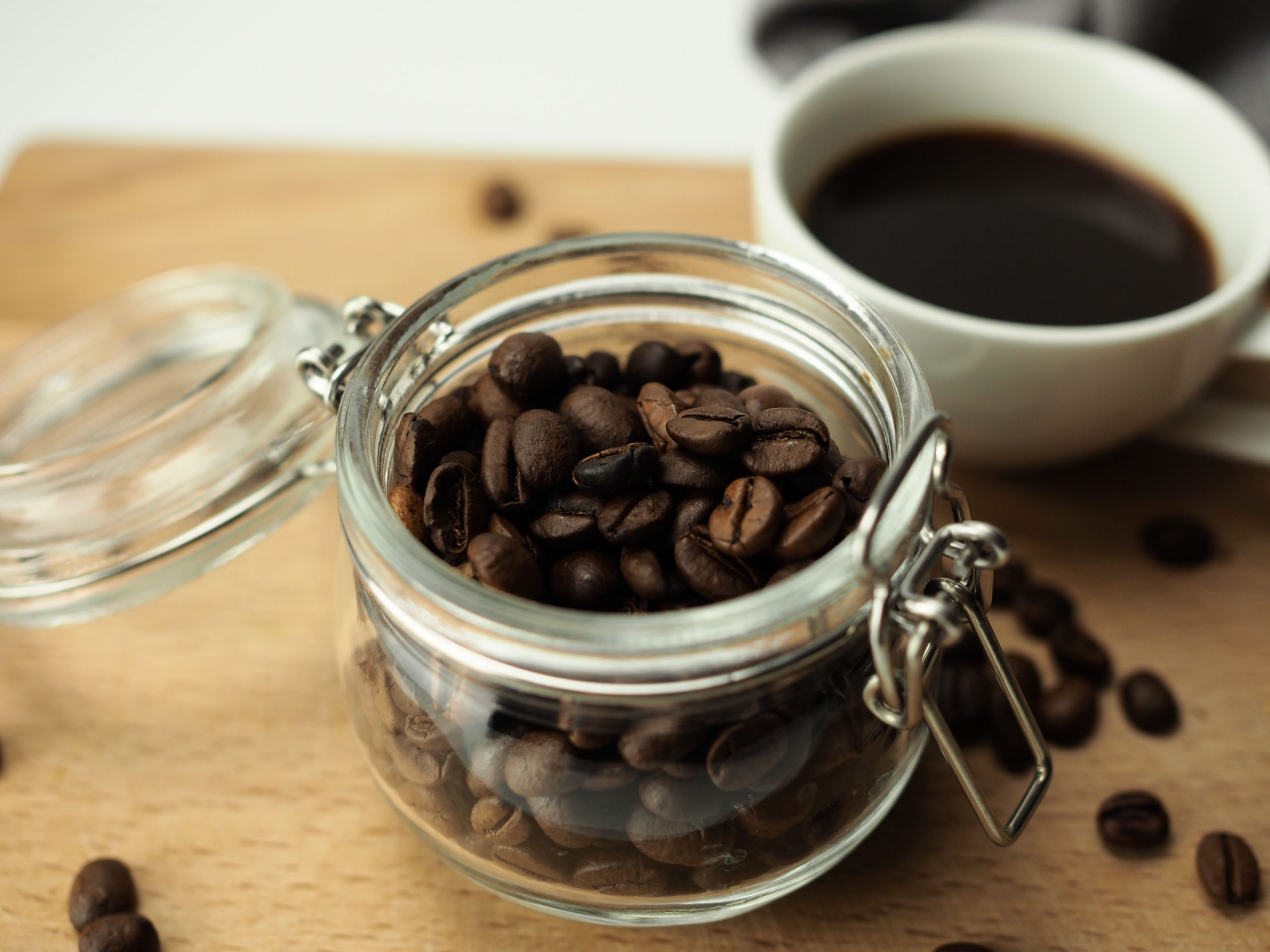
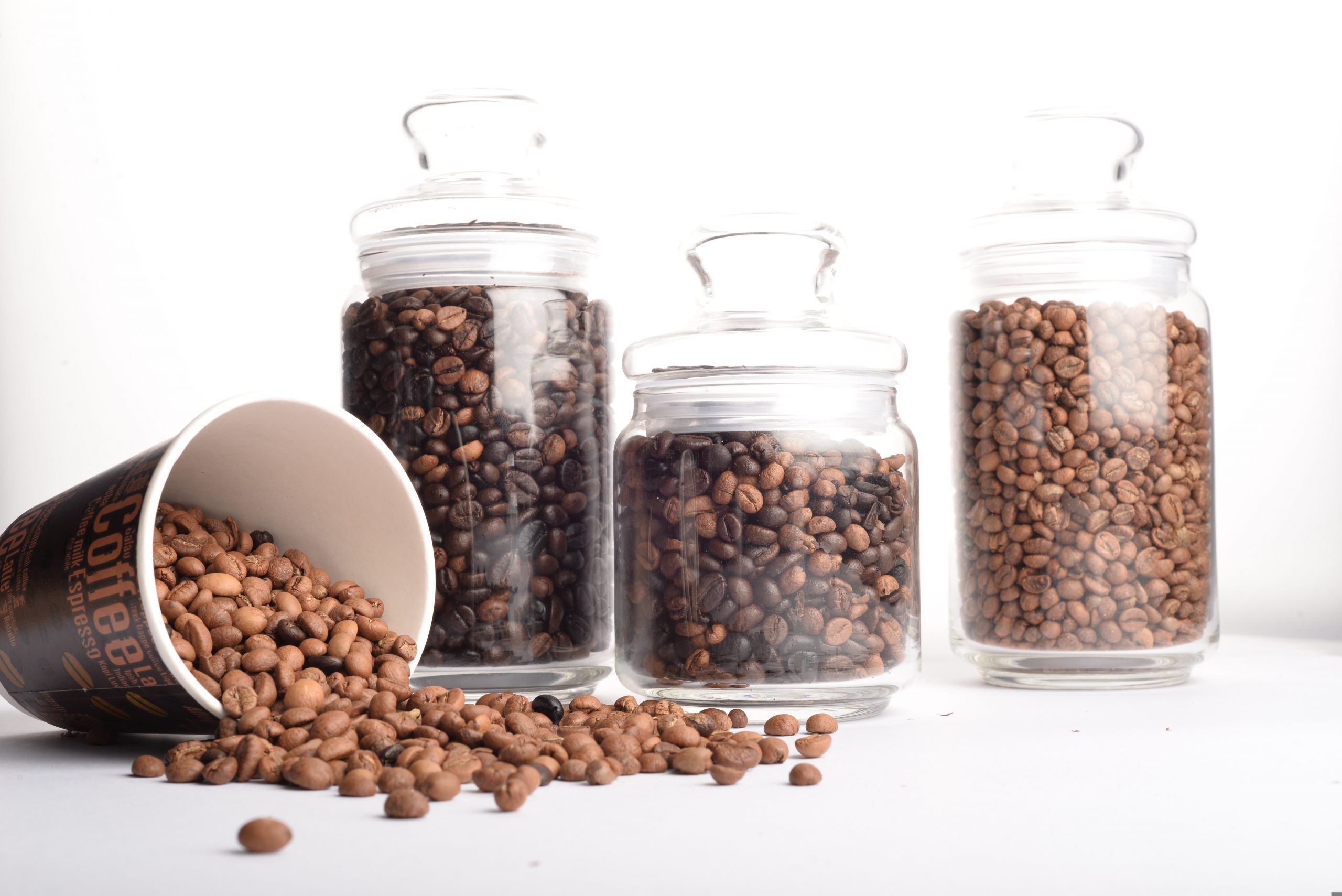
Clear glass canisters look great on a counter, and it’s easy to assume that as long as the lid seals tightly, the coffee is protected. But an airtight container that lets light through is only solving half the problem.
Light exposure accelerates the breakdown of the same aromatic compounds that oxygen attacks, so a clear jar sitting near a window or under kitchen lighting can visibly and noticeably speed up staling, even if no air is getting in.
The fix: Choose opaque, UV-blocking containers instead of clear glass, or store clear containers inside a cabinet away from light.
Mistake 3: Storing Coffee in the Fridge or Freezer Incorrectly
This is one of the most debated coffee storage mistakes, and the truth is more nuanced than a flat “never” or “always.”
Why the fridge introduces moisture and odor problems. Refrigerators are humid environments with constant temperature fluctuation every time the door opens. Coffee absorbs both moisture and surrounding odors easily, so beans stored in the fridge often pick up unwanted smells from other food and degrade faster due to condensation.
When freezing can work if done correctly. Long-term freezing can actually help preserve coffee, but only under specific conditions: beans need to be portioned into small, airtight, moisture-proof packages before freezing, and each portion should be used up shortly after thawing.
Why constant in-and-out freezer use damages beans. The real problem isn’t the freezer itself, it’s repeated temperature cycling. Pulling coffee out, letting it warm to room temperature, and putting it back introduces condensation each time, which speeds up staling and can affect flavor. This is why keeping one open bag in the freezer for daily use tends to backfire, while pre-portioned single-use freezer packs work much better.
Quick tip: If you want to freeze coffee, divide it into small, single-use portions first, so you’re only opening one sealed portion at a time instead of exposing the whole bag repeatedly.
Mistake 4: Storing Coffee Near Heat or Sunlight
A bag of beans sitting next to the stove, on a sunny windowsill, or above the oven might look convenient, but that spot is actively working against your coffee. Heat speeds up the chemical reactions behind oxidation, and direct sunlight compounds the damage through light exposure.
Even indirect warmth from nearby appliances can raise the temperature of stored coffee enough to shorten its useful shelf life.
The fix: Store coffee in a cool, dark cabinet or pantry, away from any heat source or direct light, ideally somewhere with a stable, moderate temperature.
Mistake 5: Buying Too Much Coffee at Once
Buying in bulk feels efficient, but coffee doesn’t behave like a shelf-stable pantry staple. Whole bean coffee is generally at its best within two to four weeks of the roast date, and that window shrinks with less-than-ideal storage.
A large bag that takes two months to finish means you’re drinking increasingly stale coffee for most of that time, even if the first few cups tasted great.
The fix: Buy smaller amounts more frequently rather than stocking up. If you tend to buy in bulk out of convenience, Café do Paraíso smaller-batch bags make it easier to always be working through a fresher supply instead of a large bag that sits half-used for weeks.
Mistake 6: Grinding Coffee Too Far in Advance
Whole beans stale slowly because their surface area is relatively small compared to their volume. Grinding coffee breaks that surface area open dramatically, exposing far more of the bean to oxygen at once.
Ground coffee can lose noticeable aroma and flavor within days, sometimes even hours, compared to whole beans stored the same way. Pre-grinding a week’s worth of coffee for convenience is one of the fastest ways to flatten flavor before you even brew it.
The fix: Grind only what you need right before brewing. If convenience is the main reason you pre-grind, consider adjusting your morning routine instead, since freshly ground coffee makes a noticeable difference in the cup.
Mistake 7: Storing Beans Near Strong-Smelling Foods or Spices
Coffee is remarkably good at absorbing surrounding aromas, which is part of why proper storage matters so much. Keeping beans in a cabinet next to spices, onions, or other strong-smelling ingredients can transfer unwanted flavors into your coffee over time.
This mistake is easy to overlook because it doesn’t ruin coffee as fast as heat or light exposure, but it can quietly affect flavor in a way that’s hard to pinpoint.
The fix: Store coffee in its own dedicated space, away from strong-smelling foods and spices, ideally in a container built specifically for coffee storage.
| Mistake | Why It Hurts Freshness | The Fix |
| Leaving beans in the original bag | Most bags aren’t airtight once opened | Transfer to a sealed, airtight container |
| Using clear jars or containers | Light exposure speeds up staling | Use opaque, UV-blocking containers |
| Storing coffee in the fridge | Moisture and odor absorption | Keep coffee out of the fridge entirely |
| Freezing without portioning | Repeated temperature cycling causes condensation | Freeze in small, airtight, single-use portions |
| Storing near heat or sunlight | Heat and light accelerate oxidation | Store in a cool, dark cabinet |
| Buying too much coffee at once | Beans sit too long before use | Buy smaller amounts more often |
| Grinding coffee too far in advance | Increased surface area speeds oxidation | Grind right before brewing |
| Storing near strong-smelling foods | Coffee absorbs surrounding aromas | Store coffee in its own dedicated space |
How to Store Coffee Beans the Right Way
Once you know what to avoid, the actual solution is straightforward.
- Use an airtight, opaque container. This blocks both oxygen and light, the two biggest contributors to staling.
- Choose a cool, dark, dry storage location, such as a pantry or cabinet away from appliances and windows.
- Portion coffee for freezing when needed, sealing each portion individually rather than freezing one large open bag.
- Buy smaller amounts more often, timed closer to how quickly you actually go through coffee.
Since good storage only protects the freshness you start with, it also helps to begin with beans that are actually fresh. Café do Paraíso freshly roasted coffee gives you a stronger starting point, since no storage method can restore aroma and flavor that were already fading before the bag was sealed.
Coffee Roasting Fundamentals
If you’re curious about how roasting itself affects how beans age and store, Home Coffee Roasting covers what happens to beans in the first few days after roasting, which is directly relevant to how you should store them.
How Long Coffee Stays Fresh When Stored Correctly
As a general guideline, here’s how long coffee typically holds its quality when stored properly:
- Whole bean coffee: Best flavor within two to four weeks of the roast date, with a gradual, noticeable decline afterward
- Ground coffee: Best flavor within one to two weeks, since the increased surface area speeds up oxidation significantly
- Properly frozen, portioned beans: Can hold reasonably well for a few months, though quality is still best used within the first month or two after freezing
These are general ranges rather than exact cutoffs. Coffee doesn’t become undrinkable overnight, but it does lose complexity and aroma steadily, which is why proper storage and reasonable buying habits make such a noticeable difference.
Frequently Asked Questions
What are the most common coffee storage mistakes?
The most common ones are leaving beans in the original bag, using clear containers, storing coffee in the fridge, keeping beans near heat or sunlight, buying too much at once, grinding too far in advance, and storing coffee near strong-smelling foods.
How should coffee beans be stored properly?
In an airtight, opaque container, kept in a cool, dark, dry spot away from heat, light, and strong odors.
Why does the original bag or a clear jar hurt freshness?
Most bags aren’t airtight once opened, and clear jars let light through even if they seal well, both of which speed up staling.
Is storing coffee in the fridge or freezer a mistake?
The fridge is generally a mistake due to moisture and odor absorption. The freezer can work, but only if beans are portioned and sealed properly, since repeated temperature cycling causes damage.
Does storing coffee near heat or sunlight matter?
Yes. Both heat and light speed up oxidation, which is the main chemical process behind coffee going stale.
Does storing whole beans near strong-smelling foods affect flavor?
Yes. Coffee absorbs surrounding aromas easily, so storing it near spices or pungent foods can subtly change its flavor over time.
How much coffee should be bought at a time to avoid staleness?
Buy roughly what you’ll use within two to four weeks, rather than large quantities that sit around for months.
Does grinding coffee in advance count as a storage mistake?
Yes. Grinding increases surface area and speeds up oxidation dramatically, so pre-ground coffee stales much faster than whole beans.
What is the ideal container for storing coffee beans?
An airtight, opaque container that blocks both light and air, kept away from heat sources.
How long can coffee stay fresh if stored correctly?
Whole beans typically taste best within two to four weeks of roasting, while ground coffee is best within one to two weeks.
Final Thoughts
Most coffee storage mistakes aren’t dramatic. They’re small, everyday habits: an unsealed bag, a pretty glass jar on the counter, a bulk bag that takes too long to finish. None of them ruin coffee instantly, but together they steadily strip away the aroma and flavor that made the beans worth buying in the first place.
Fixing this doesn’t take much. Use an airtight, opaque container, keep beans away from heat and light, buy smaller amounts more often, and grind only what you need. Combined with beans that were fresh to begin with, these habits are the difference between a cup that tastes like it should and one that quietly falls short.